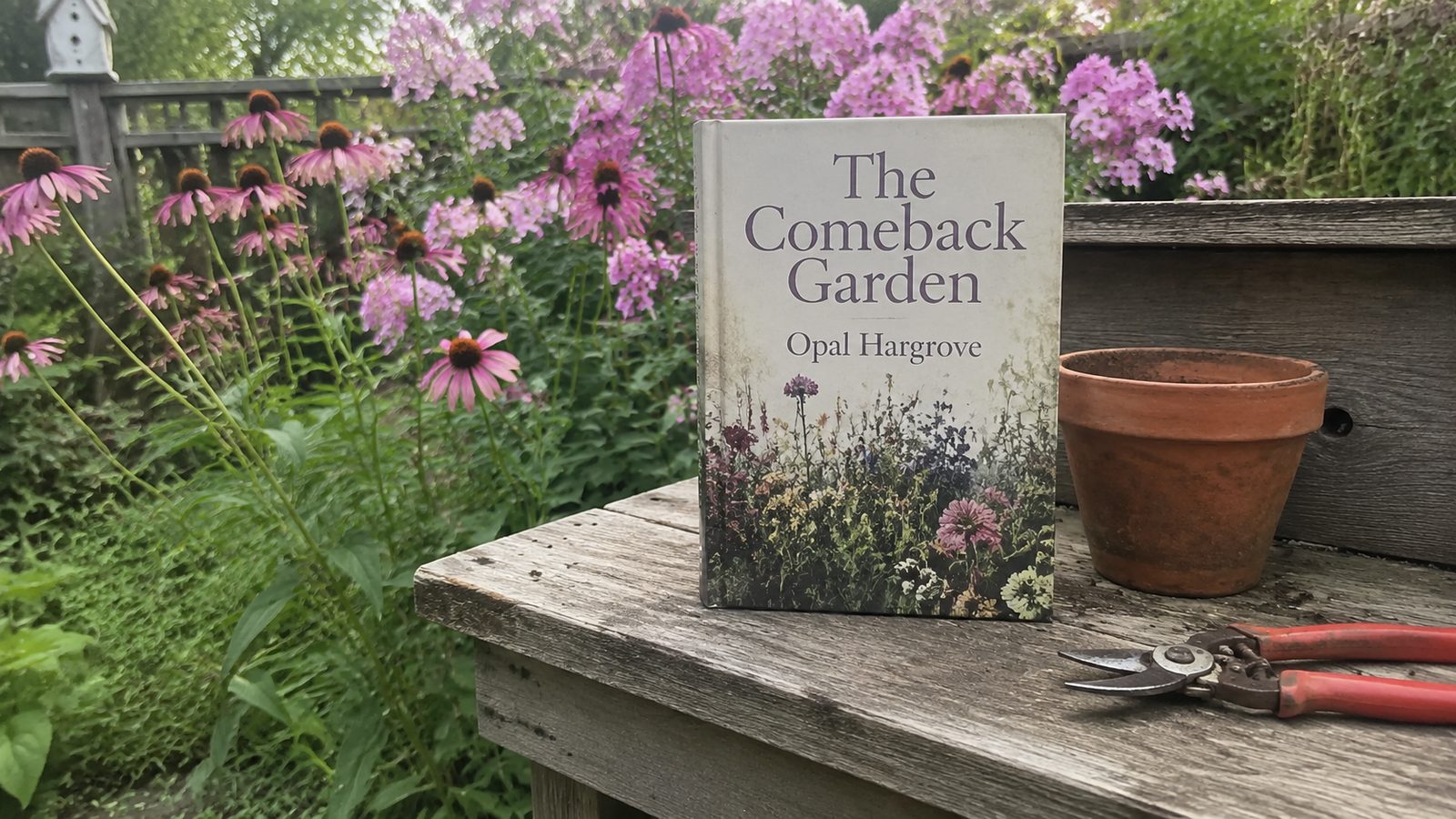
Two hundred and seventy pages on the flowers that come back on their own — with the zone range, the spacing, the depth and the month written down for every single one.
Pay once. Download the file. It is yours. · 60 days to change your mind.
270 pages · 26 chapters · 8 parts · three printable sheets
Before you say it
“That will never live through my winter.”
I know. That is the first thing most people think, and they are right to think it. So it is the first thing I fixed.
Every plant in this book carries its zone range, printed right beside it. Not a note at the back. Not check your area. The numbers, with the plant, every time. And every chapter about pots carries the two-zones-colder rule, because a pot is a colder place than the ground six inches away.
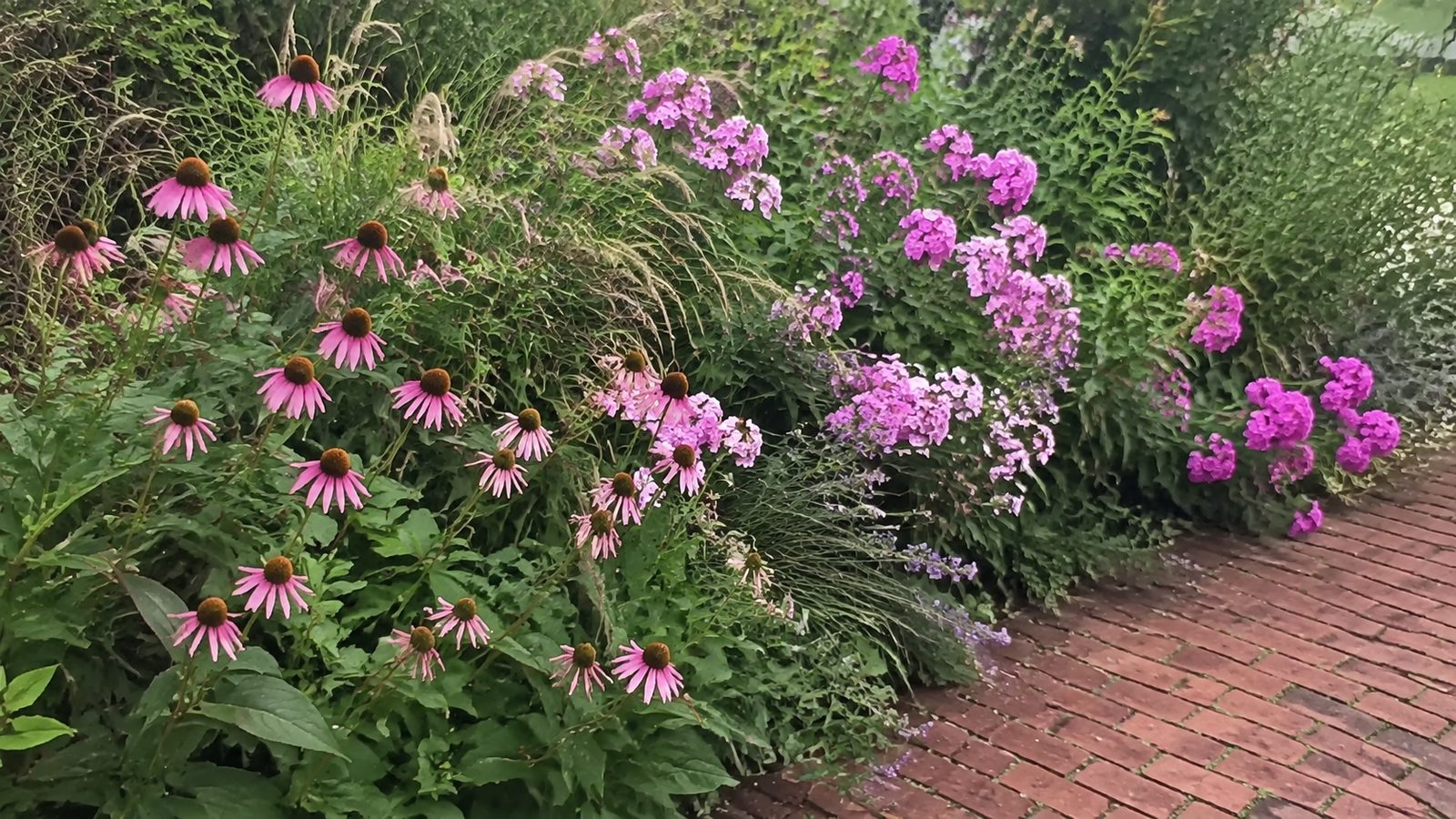
ECHINACEA PURPUREA · ZONES 3–8 · 18–24 IN APART · CROWN AT SOIL LEVEL · PLANT APRIL–MAY
270 pages26 chapters in 8 partsevery plant carries a zone range$50 once — no subscription60-day money back
The whole thing, and what comes with it
One book, three sheets for the wall.
You are already here because you know the April problem. So here is everything, before you scroll.
The Comeback Garden26 chapters, 270 pages, illustrated. Every plant with its zone range, its spacing, its depth and its month.$79
The Zone CardEvery plant in the book on one card, front and back: zone range, spacing, depth, and the month to put it in. Print it and take it to the garden centre.$19
Seedling or Weed?The page for the back door. How to tell your own free seedlings from the weeds they get mistaken for, leaf by leaf, kneeling in the bed with nothing to compare against.$24
The January Jug SheetWinter sowing by zone: what to sow, which week, and what the jug should look like the morning you open it.$19
All four, today$141$50
Launch price. It goes to $79 after Sunday. — left.
A PDF you download and keep. No app, no login, no subscription.
Sixty days. If it is not what you wanted, send me an email. The $50 comes back the same day, and you keep the book. I would rather have that than your money.
What April costs
The same flat, every spring, for the rest of your life.
One flat of bedding annuals cost $21.99 at a nursery in Xenia, Ohio, in the spring of 2026. Seven packets of seed cost $19.63.
The seed makes more flowers than the flat does. Some of it comes back on its own next year. The flat is finished the morning of the first hard frost — and then it is April again, and you are standing in the same aisle, with the same cart, buying the same plants you buried in October.
That is the whole cycle. It is not your fault. It is how the garden centre is built.
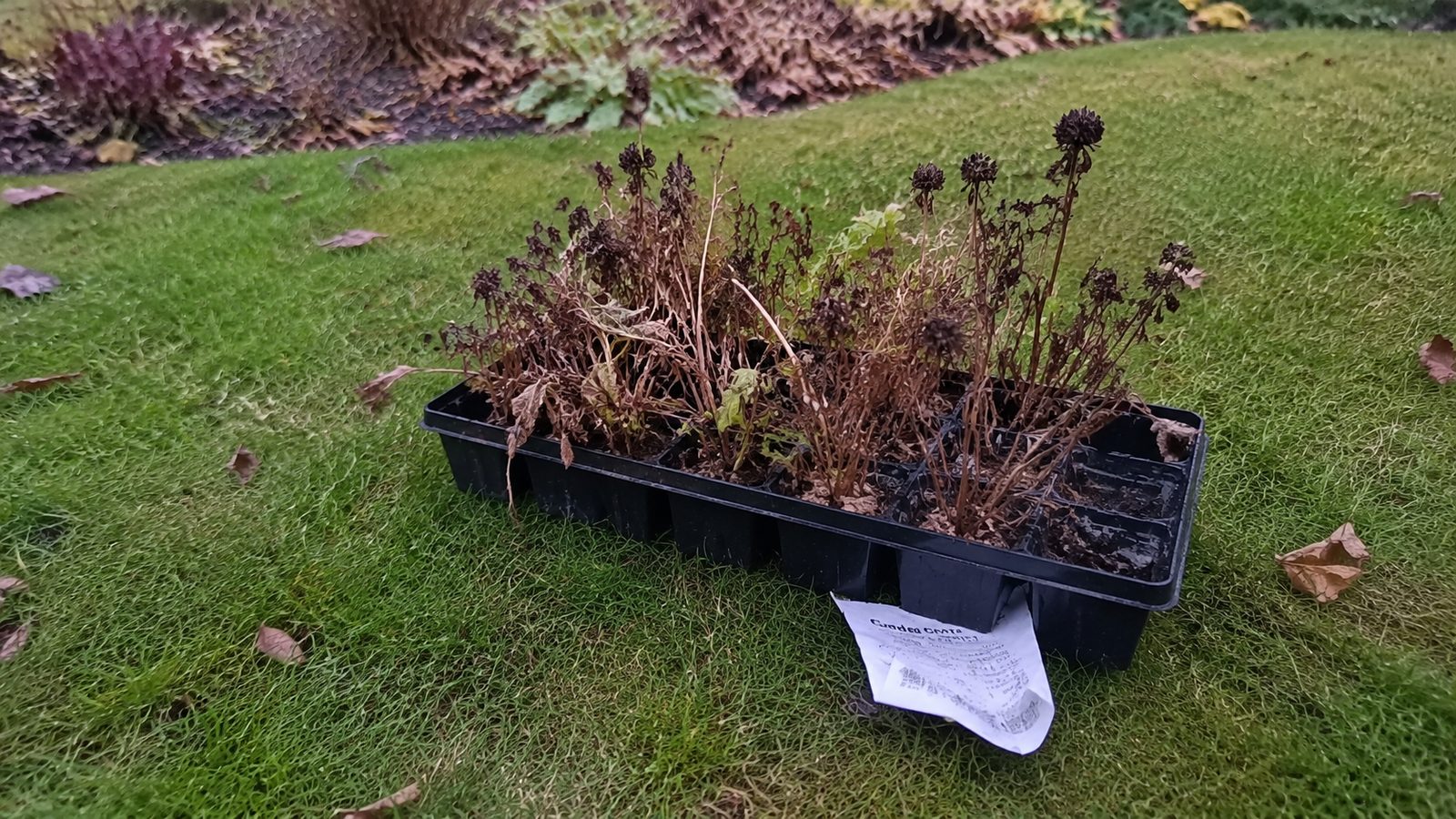
October. Same tray, same receipt, same as last year.
What one spring looks like now
One flat of bedding annuals$21.99
The second flat, because one is never enough$21.99
Four-inch pots to fill the gaps, each$1.49–$4.29
What is still alive in Novembernone of it
Next Aprilall of it again
What one spring looks like after
Seven packets of seed$19.63
Milk jugs out of your own recycling$0
Plants split off what you already own$0
Seedlings that came up on their own$0
What is still there next Aprilmore than last year
Go and think about what you really spent last April. Not what you meant to spend. What you spent.
I am not going to promise you a number. I do not know your yard and I do not know how much of this you will actually do. That part is honest and I would rather say it out loud.
What I will say is this. The first April you walk past that flat and do not put it in the cart, this book has paid for itself, and you still have the book.
Prices: one flat of bedding annuals at $21.99 and seven packets of seed at $19.63, both at retail in Xenia, Ohio, spring 2026. Four-inch annual prices from dated 2026 grower price lists. These are shelf prices on a given day in one part of the country — yours will be near, not exact.
$50 once · 60-day money back · yours to keep either way
The mechanism · The Four Questions
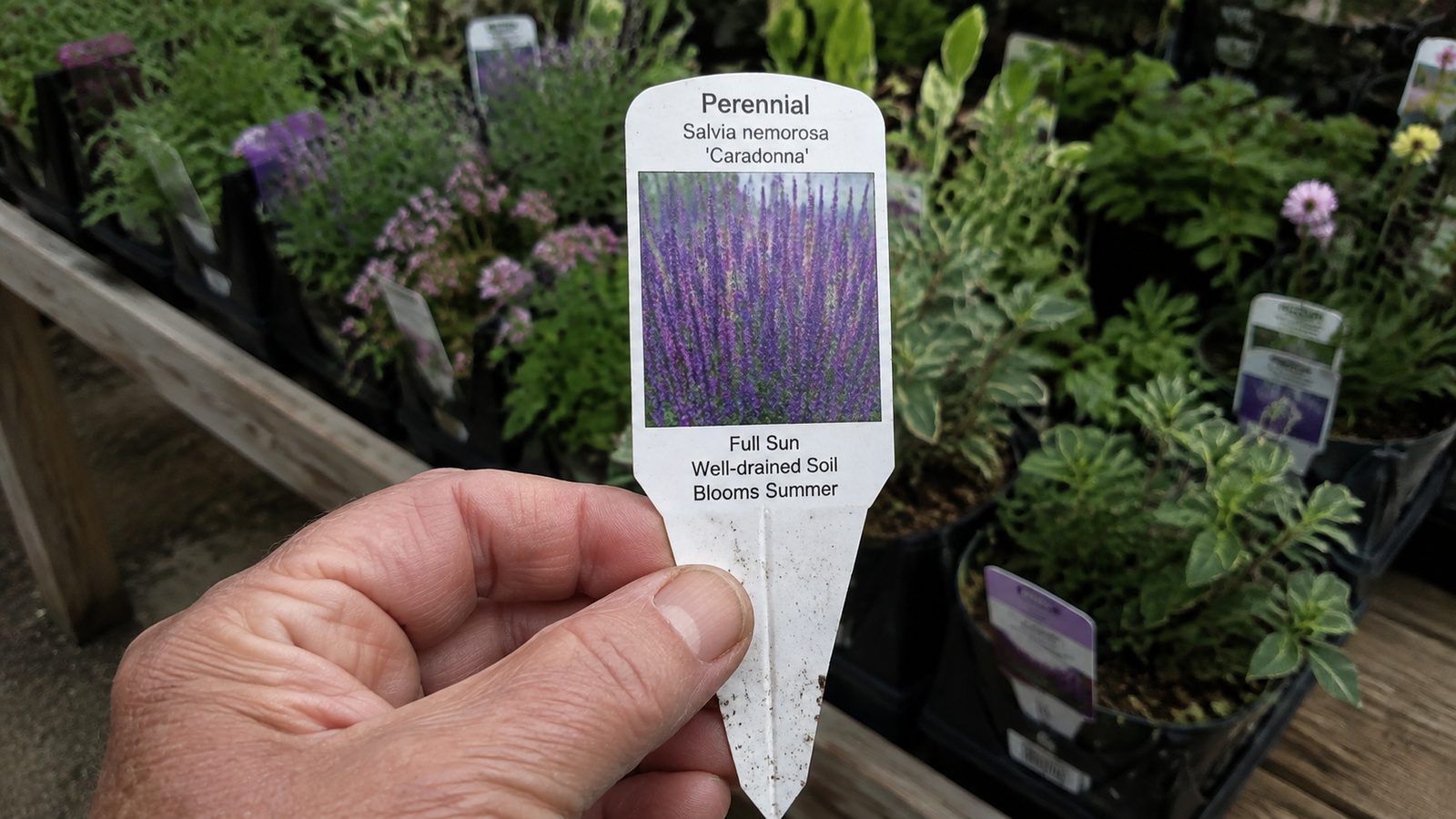
“Blooms Summer” is not a date.
Look at that tag. Two words, and both of them are doing work that nobody has to stand behind.
Long-blooming is a promise about weeks. Perennial is a promise about years. They are not the same promise, and neither one has a number attached to it. No federal rule says what a perennial tag has to tell you. Minnesota says a tag may not lie. It does not say a tag has to tell you anything.
So I ask four questions about any plant on any bench before it goes in the cart. Two of them are not printed on the tag. One of them decides whether you buy that plant twice.
That is chapter one. The answers are the rest of the book.
The tag. That is the whole argument.
The hardest number in the book
The Chicago Botanic Garden ran a coneflower trial from 2019 to 2023. They lost 75 plants out of 274. Only 14 of the 52 kinds they grew still had all five plants alive at the end. That is printed in the book, against my own interest, because I would rather you heard it from me than found it out in your own bed. Perennial is a promise about years. Some of them keep it better than others, and the book says which.
What is inside
Eight parts. Twenty-six chapters. Every one of them is a thing you do.
You do not have to do all of it. Most people start with one bed and one January afternoon. The parts are uneven because the garden is uneven — some jobs need five chapters and some need two.
Part One
What the Tag Doesn’t Say
Two words on that tag are doing all the work and neither one has anything behind it.
The Four Questions to Ask About Any Plant on Any Bench
Long-Blooming Is a Promise About Weeks. Perennial Is a Promise About Years.
Why the Bed by Your Front Steps Goes Quiet in July
What Your Zone Number Actually Covers, and What It Doesn’t
Part Two
25 Plants That Come Back
The workhorse list, with the spacing, the depth, the month and the zone for every one.
25 Long-Blooming Perennials, With the Dates Somebody Wrote Down
The Spacing, the Depth and the Month for Every Plant in This Book
Full Sun, and What to Do With the Bed That Only Gets Four Hours
What the Deer and the Rabbits Walk Past
The Ones I’d Never Plant Again
Part Three
Pots That Come Back
A pot is a colder place than the ground six inches away. Plant it like it is.
Top 20 Perennials for Pots That Live Through the Winter
Two Zones Colder: The Rule That Saves the Pot
How to Fill a Big Planter Without Buying Six Bags of Mix
Part Four
Free Plants From What You Already Own
The garden is already making next year’s plants. Most people throw them away.
The Self-Seeders That Fill a Bed for Nothing
Divide It in Two: Which Plants, Which Month, Which Way
Hundreds of Flowers From What Is Already in the Bed
Part Five
The January Job
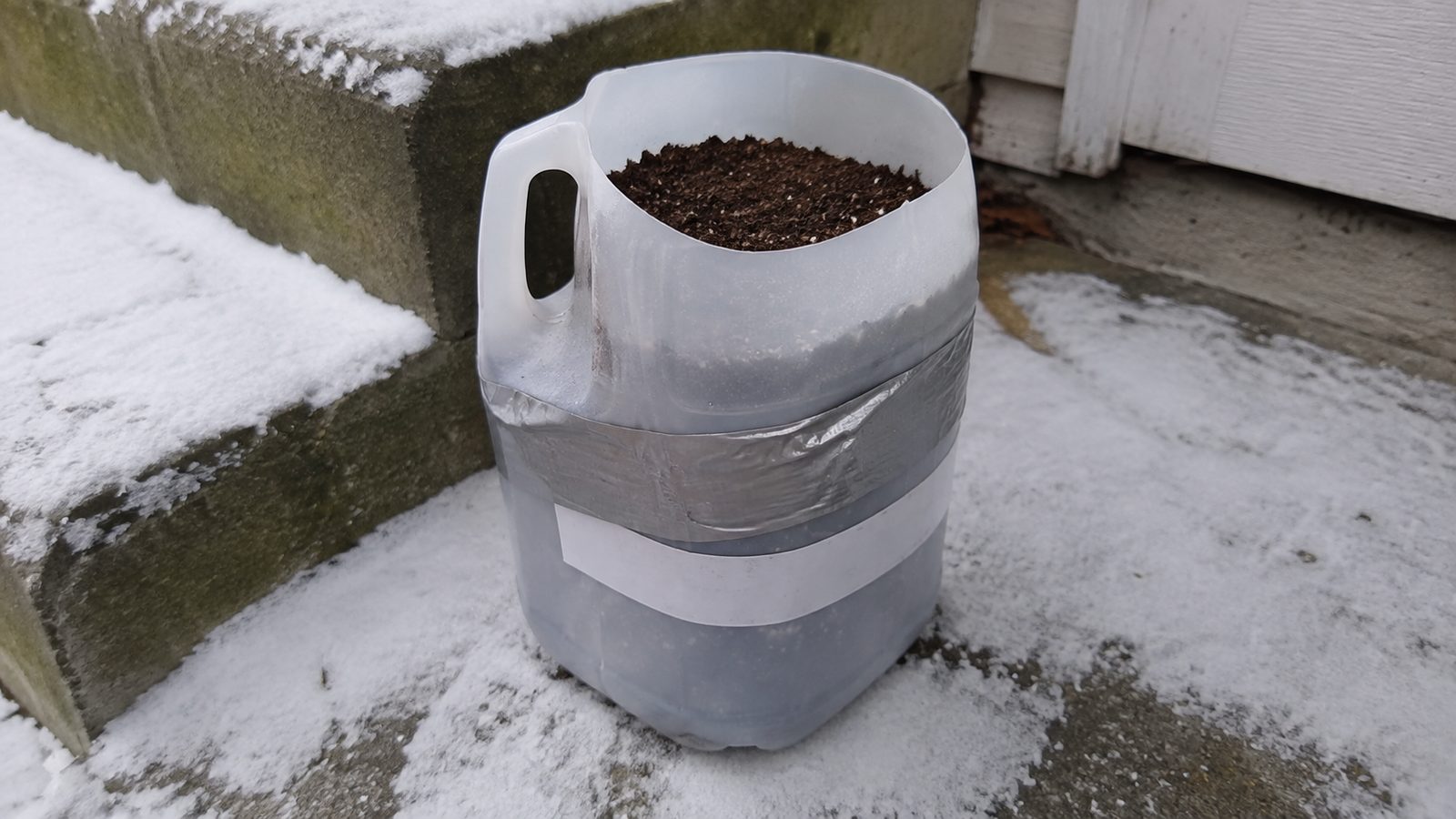
A milk jug on the back step in January, opened in April, full of plants you did not buy. No grow lights, no heat mats, no south window.
Winter Sowing: Milk Jugs, a January Afternoon, No Grow Lights
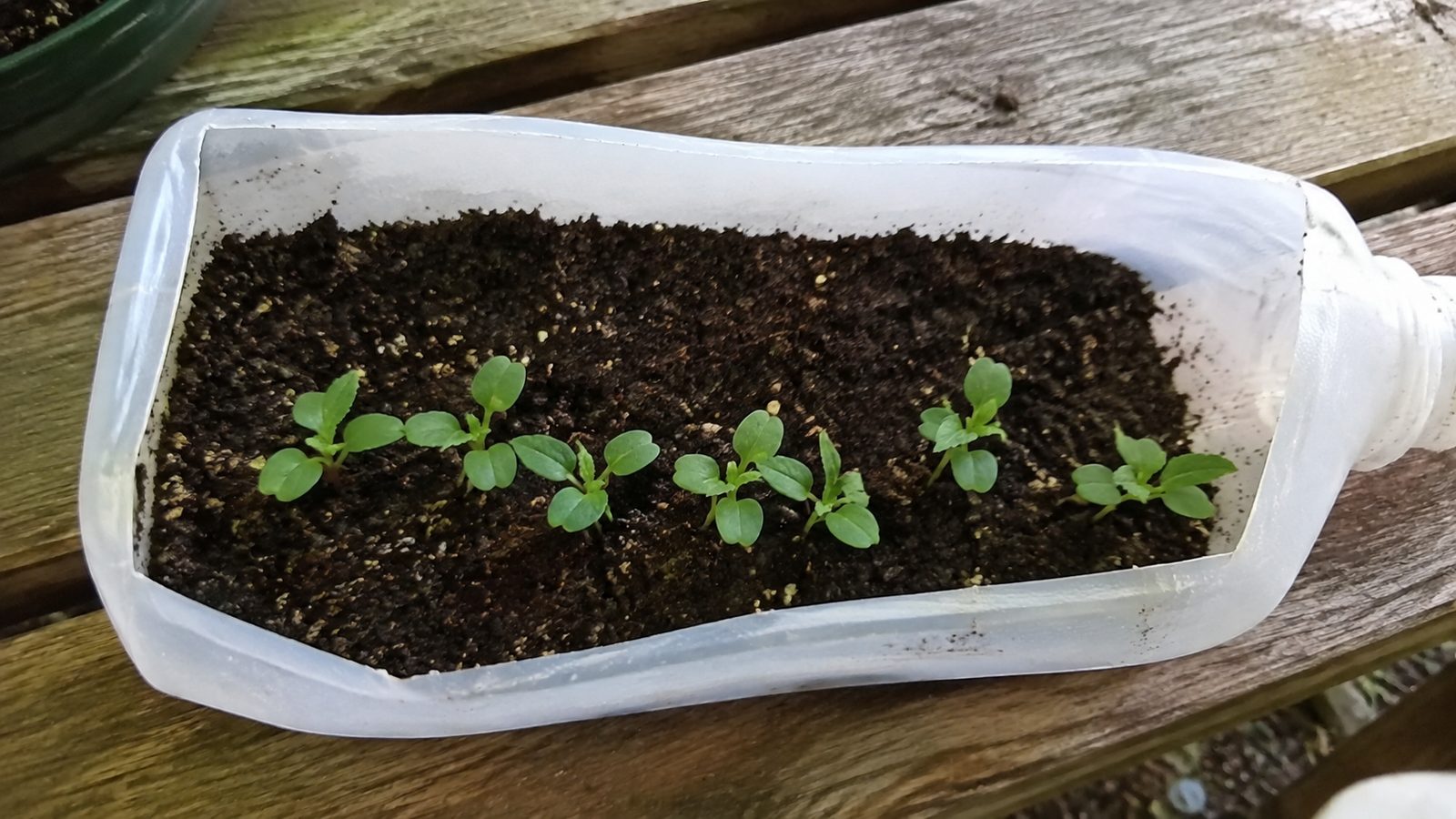
What the Seedling Looks Like Before It Looks Like Anything
Part Six
Flowers From Seed the Same Summer
A whole border for the price of a few packets, straight in the ground, no equipment.
Seven Annuals a Beginner Can Sow Straight in the Ground
Sowing Dates by Zone, Written Out
The Two Things the Seed Packet Won’t Tell You
Part Seven
Making It Look Like Somebody Planned It
The difference between a bed and a border is spacing and repetition, not money.
Eight Plants That Look Professional and Are Not
Mingled, Not Islands: Closing the Bare Soil
Pockets of Beauty in an Ordinary Yard
What the Garden Looks Like From the Sidewalk
Part Eight
Keeping It Going
Written for the reader whose knees have already told her something. Waist height, benches, containers. Not an afterthought chapter at the back.
$50 once · 60-day money back · no subscription, ever
Who this was written for
These are the people the book is for.
Every quote below was left on free gardening videos about these same methods. They are printed word for word, with the number of people who agreed with them. They are not reviews of this book — the book is new. As buyers write in, their notes will go here instead.
“I spend way too much on annuals. While I absolutely love them, I’m thinking about retirement and whether I’ll have the same garden budget. These perennial containers are fantastic and a better investment for the long term.”
Marlene K. · Ohio17 agreed
“I envy your growing zone, I garden in zone 4, we had a long period of -20 F temps this last winter (brutal). I find the only plants that do well to overwinter in their pots (cement/or tough plastic, the clay/ceramic will crack) are the sedums, day lilies, & evergreen shrubs. The rest struggle to survive the winter we have here.”
Judy R. · Minnesota20 agreed
“This is the first time someone has ever explained to winter sowing in such a easy manner. I always thought you had to have heat lamps and space and big windows and more heat. Past explanations have always felt super expensive just to start a plant. Thank you kindly for taking us through this very simple set up. My daughter and I are going to have so much fun!!”
Bonnie T. · Michigan83 agreed
“Great video. I love growing perennials in containers. Saves a lot of money. But if you plan on leaving the perennials in containers over the winter it’s best to use those that are at least hardy one zone below yours, two zones is better. Alternatively, take out of the container in the fall and plant in the ground. Put back in early spring or try something new.”
Ellen M. · New Hampshire58 agreed
“My drift shrub roses did not come back that were in 14" pots that I cared for properly all season 2025 and put them under a porch to protect from our constant wind and 10 degree temps.”
Sandra P. · Indiana3 agreed
“Thank you so much for the video! Your voice and mannerisms are so pleasant... I am just started to learn about perennials and reseeding. This video was very helpful. After watching, I’m afraid I’ve pulled seedlings thinking they were weeds.”
Carol S. · Pennsylvania6 agreed
“Ahhhh! I am SO EXCITED I came across this video!!!! This is exactly what I need! I cannot do the lights and heat pads anymore. This is an awesome technique. Thank you so much for sharing your experience, knowledge and energy w us”
Gloria D. · New York17 agreed
“Cardboard, bags, newsprint and old linoleum have been used for generations as a light block for smothering grass, but we have become detached from these commonplace, highly convenient and cash conserving ideas probably bc we are less in touch with life and too easily swayed by marketing. Thank you for bringing people back to free thinking.”
Rosemary V. · Vermont117 agreed
“I so enjoyed touring your yard with you I learned so much about what flowers look good together, I am 88 and still plant every year and enjoy planning all year long. Thank you for giving us so much joy.”
Ruth A. · Maine24 agreed
“I don’t have money to throw away on annuals. Besides we have a long growing season mid April till end of October.”
Wanda G. · Georgia6 agreed
“This was great I learned so much I am 76 so have to have easier garden this was just what I needed Than You”
Doris W. · Missouri2 agreed
“I wrote so many of your tips and tricks down and went to my basement and dug up the knives and put them in my flower gardening folder for this coming spring.”
Nancy B. · Illinois28 agreed
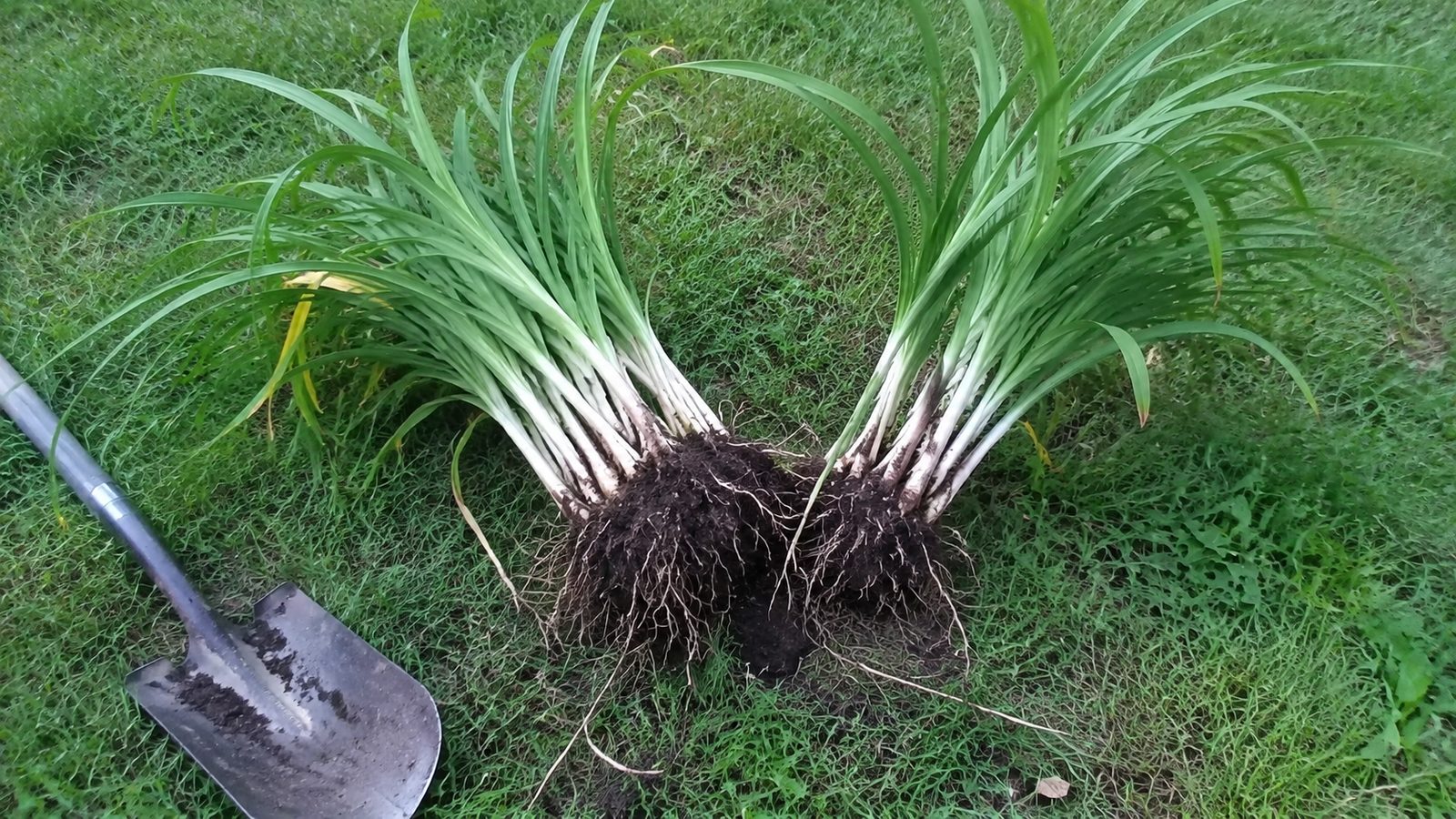
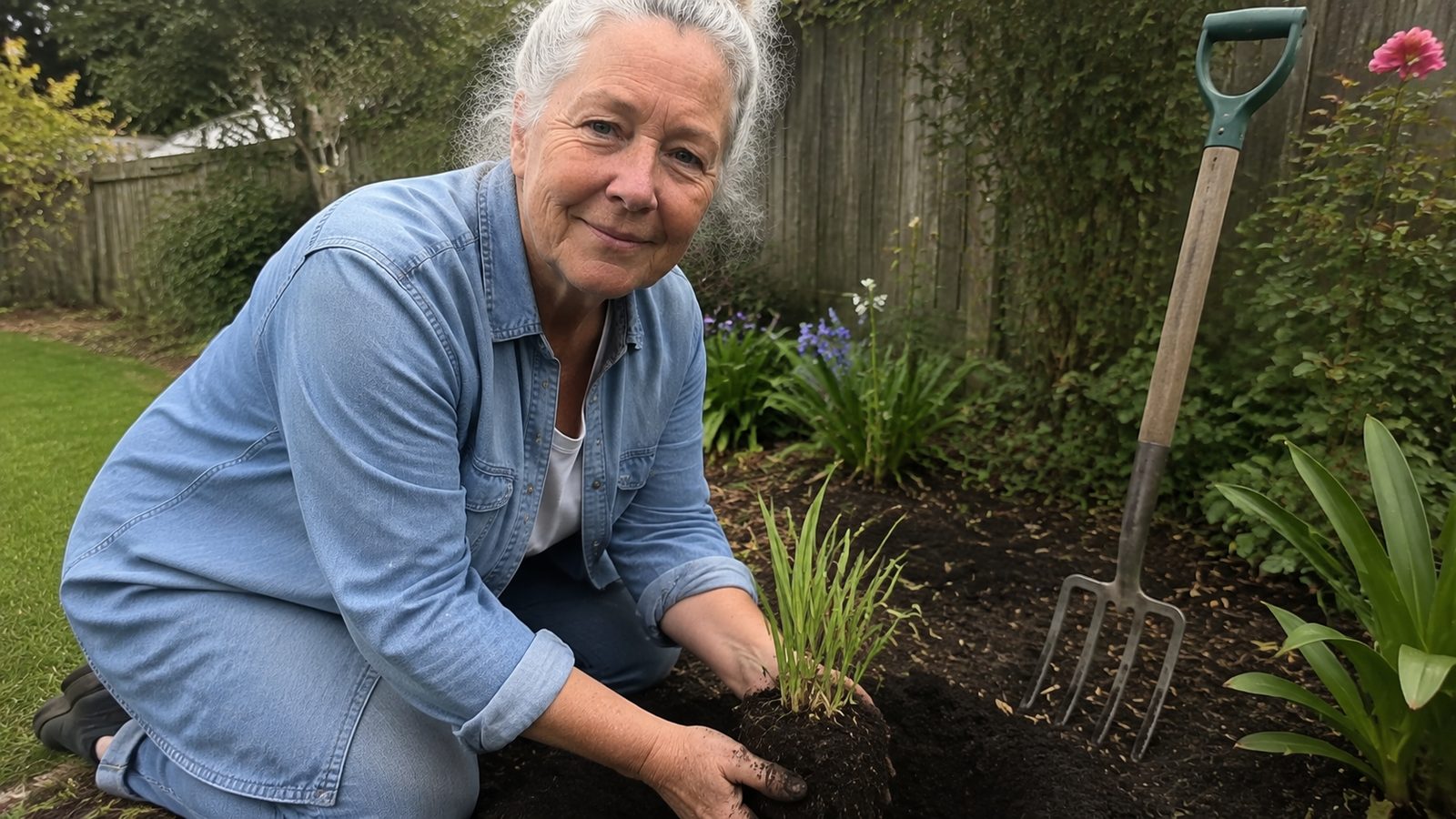
Opal, splitting a clump in half. That half is next year’s plant, and it is free.
Who wrote this
I am not an expert. I am just somebody who wrote it all down.
I have killed a lot of plants. Some of them twice. The chapter called The Ones I’d Never Plant Again is a list of my own money going in the compost, and I left it in on purpose, because a book that only tells you what works is not telling you much.
What I do have is a notebook. Twenty-odd years of it. Which plant went in, which month, how far apart, how deep, and whether it was still there the next spring. That notebook is what this book is. All of it in one place, sorted, drawn, and checked against what the extension services actually publish — and where they disagree with each other, I say so instead of picking the tidy answer.
I do not sell plants. Nobody paid me to name anything in here. If a cheap way works better than an expensive one, the cheap way is what is printed.
If it is in this book, I grew it, killed it, or split it — and then I wrote down what happened.
The price, plainly
$50 once. No subscription. Yours forever.
You pay one time. You download a PDF. There is no app to install, no account to make, no password, nothing that expires and nothing that charges you again next year. Print it if you like — a lot of people keep it in a folder in the shed.
The Comeback Garden270 pages, 26 chapters, illustrated. Every plant with its zone.$79
The Zone CardOne card, front and back. Zone, spacing, depth, month.$19
Seedling or Weed?The sheet for the back door.$24
The January Jug SheetWinter sowing by zone, week by week.$19
Everything, until Sunday$141$50
After Sunday it is $79. — left on the launch price.
Visa · Mastercard · American Express · Discover · Apple Pay
Sixty days, and the book stays yours. Email me inside sixty days and the $50 goes back to your card the same day. You do not have to give me a reason, and you do not have to send the book back. There is nothing to send back.
Questions people ask
Straight answers.
Every plant in the book carries a zone range, so you can see in one second whether it is for you. Nothing says “hardy in most areas.” It says the numbers.
Two honest notes. In zones 3 and 4, no plant on my list survives the winter in an above-ground pot without protection — that is printed plainly in the pot chapters rather than glossed over. And a zone is not a sowing date. Two towns in the same zone can be three weeks apart on the real weather-station tables, so the sowing months are written as a range and labelled as approximate, because that is what they are.
It is the opposite. The whole reason for the spacing, the depth and the month is that those three things are where most plants are lost, and nobody writes them down for you.
There is also a chapter listing the plants I would never put in again, and what went wrong with them. If you have lost plants, you are in the right book. Everyone who wrote this has.
Then start at Part Three. Twenty perennials that live through the winter in a pot, how to fill a big planter without buying six bags of mix, and the two-zones-colder rule that decides whether the pot makes it to April.
The design part is written around ordinary lots, not acreage. Pockets of beauty in the space you already have was the point of it.
Pieces of it are, and I would never tell you otherwise. What is not free is having it in one place, in order, with the numbers attached.
Watch ten videos and you still have to write down the spacing yourself, guess the depth, remember which month, and go and look up the zone on your own. This is that work, done once, for every plant, on paper you can carry to the bench. That is what the $50 buys — not secrets, but somebody else’s twenty years of writing it down.
A PDF. The same sort of file a bank statement or a recipe comes in. It opens on a phone, a tablet, a laptop or a library computer, and you can print any page of it.
You get the 270-page book plus three printable sheets: the Zone Card, Seedling or Weed?, and the January Jug Sheet. You download them and they are yours. No app, no account, no password, no subscription, and nothing that stops working later.
Email me inside sixty days and the $50 goes back to your card the same day. No reason needed, no forms.
You keep the book. I am not going to pretend I can take a file back off your computer, and I would not want to.
Part Eight is written for exactly that, and it is not an afterthought at the back — waist-height beds, benches, the reach distances and path widths that decide whether a bed is workable, and which plants do the job in a container you never have to kneel to.
I will be straight with you about one thing: nobody has published a figure for how much bending a given bed height saves. Anyone who gives you one made it up. What is published is the geometry, and that is what the chapter gives you.
Some of it, yes. There is a chapter on what the deer and rabbits walk past, taken from the Rutgers ratings rather than from garden gossip.
It will correct a few things you have probably been told. Hosta and tulip are rated among the worst — frequently and severely eaten. Daylily, sedum and shasta daisy are middling, not safe. I would rather tell you that now than sell you a bed the deer clear in one night.
Yes. A book on growing flowers for the vase and the neighbours, one on the shady side of the house nobody knows what to do with, and printed plant cards for a single zone.
Anyone who buys this one hears about them first and pays less for them. That is the only list I keep.
That is everything I would want to know before paying.
$50 once · 60-day money back · you keep the book either way
Before you close this
April is coming whether you plan for it or not.
You can spend it the way you spent the last one — two flats, a cart, a receipt, and an empty bed in October. Or you can spend one evening with this and let the garden start paying you back instead.
A flat of bedding annuals was $21.99 this spring, and most people carry two to the car. That is the whole price of this book, in one trip, on plants that are finished by the first hard frost.
Skip one April flat and the book has paid for itself. And if you decide inside sixty days that it was not for you, the $50 comes back the same day and you keep the book anyway.